LVSolarBuck Milestone: Full Power at 97.36% Efficiency
We reached a milestone today: the LVSolarBuck solar input module operated at its designed maximum power for the first time, and it did so at the worst-case efficiency operating point.
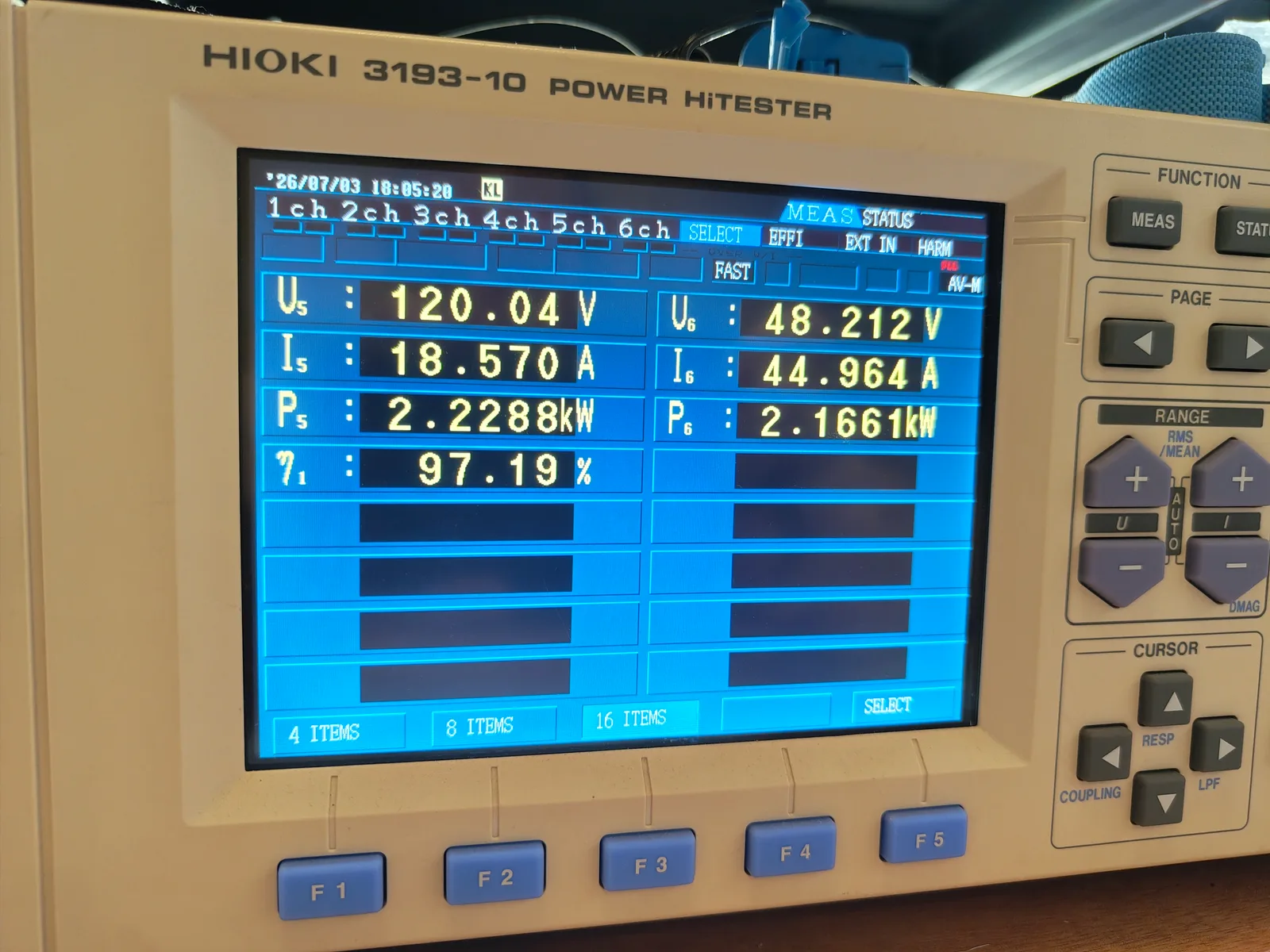
The numbers: 97.36% efficiency at 45A output, 48V out, 120V in.
To be clear about what this was: a controlled power-stage test, not MPPT operation. The input came from a programmable lab supply holding a fixed 120V: no solar panel, no tracking. This run validates the power conversion itself; MPPT operation against a real panel characteristic is a separate milestone still ahead.
Why This Point Matters
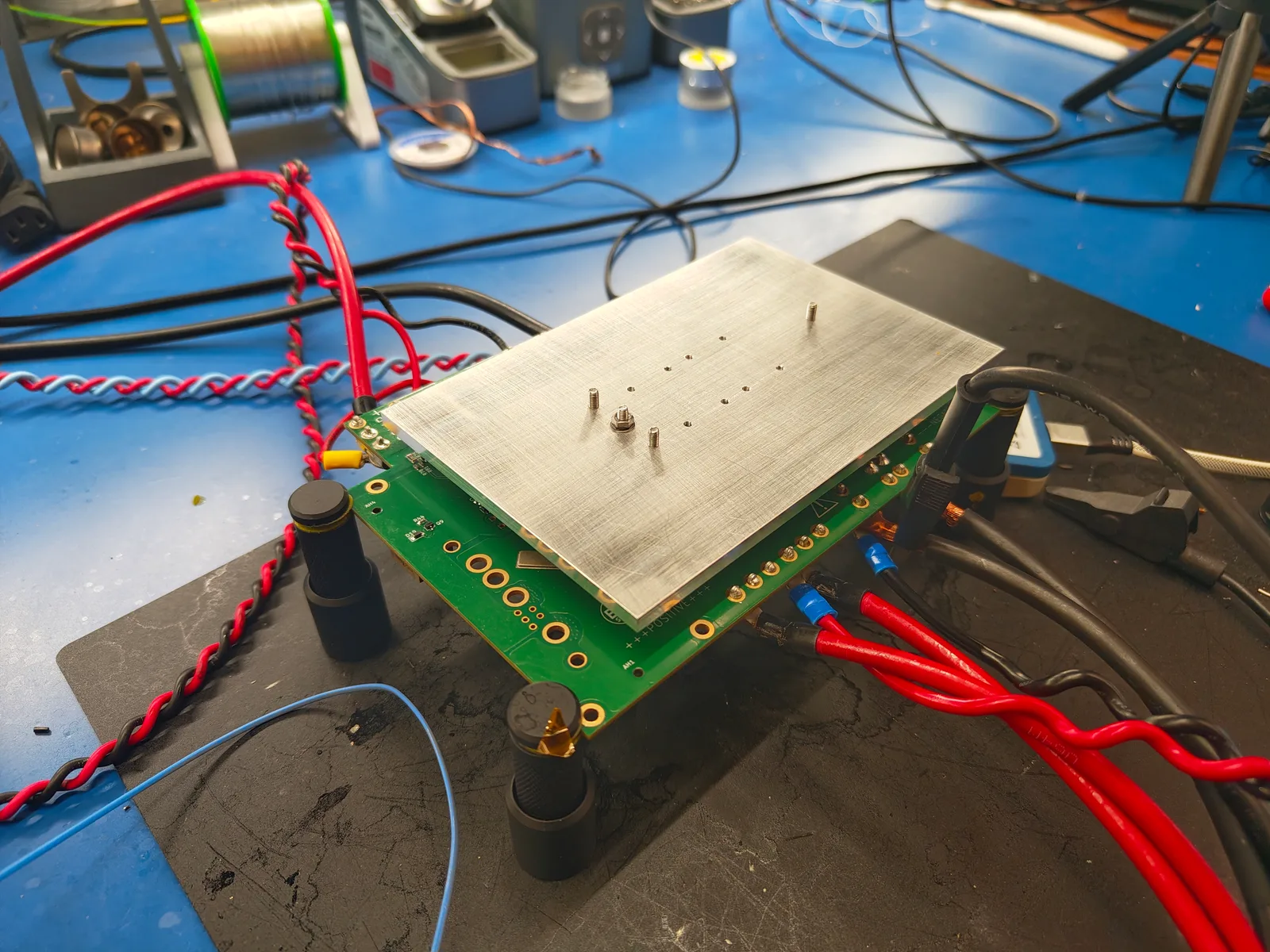
That’s not a cherry-picked sweet spot. 45A is the full designed output current, and the higher the input voltage, the harder the converter works; stepping high solar voltages down to the 48V bus is where efficiency suffers most. The hardest operating point of all sits at the 150V input limit, and a full-current run at 120V is right next to that corner.
At 45A into the 48V bus, the module is delivering roughly 2.2kW continuously, with only about 60W lost as heat.
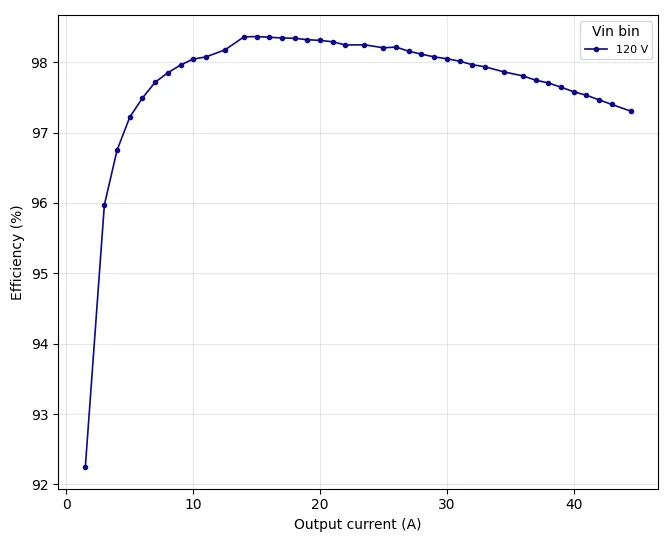
The efficiency curve at 120V input tells the full story: the converter peaks above 98.3% in the mid-load range and stays above 97.3% all the way out to the 45A limit.
How We Got Here
The LVSolarBuck is a 3-level GaN FET buck converter with active flying capacitor control, designed from scratch rather than adapted from an application note. Nobody ships this topology at this power level. In fact, as far as we know, no open-source MPPT charger exists in this power class at all: not in a 3-level topology, not in a conventional one. Every efficiency measurement runs through our automated test bench, which sweeps operating points and logs the results without anyone babysitting it.
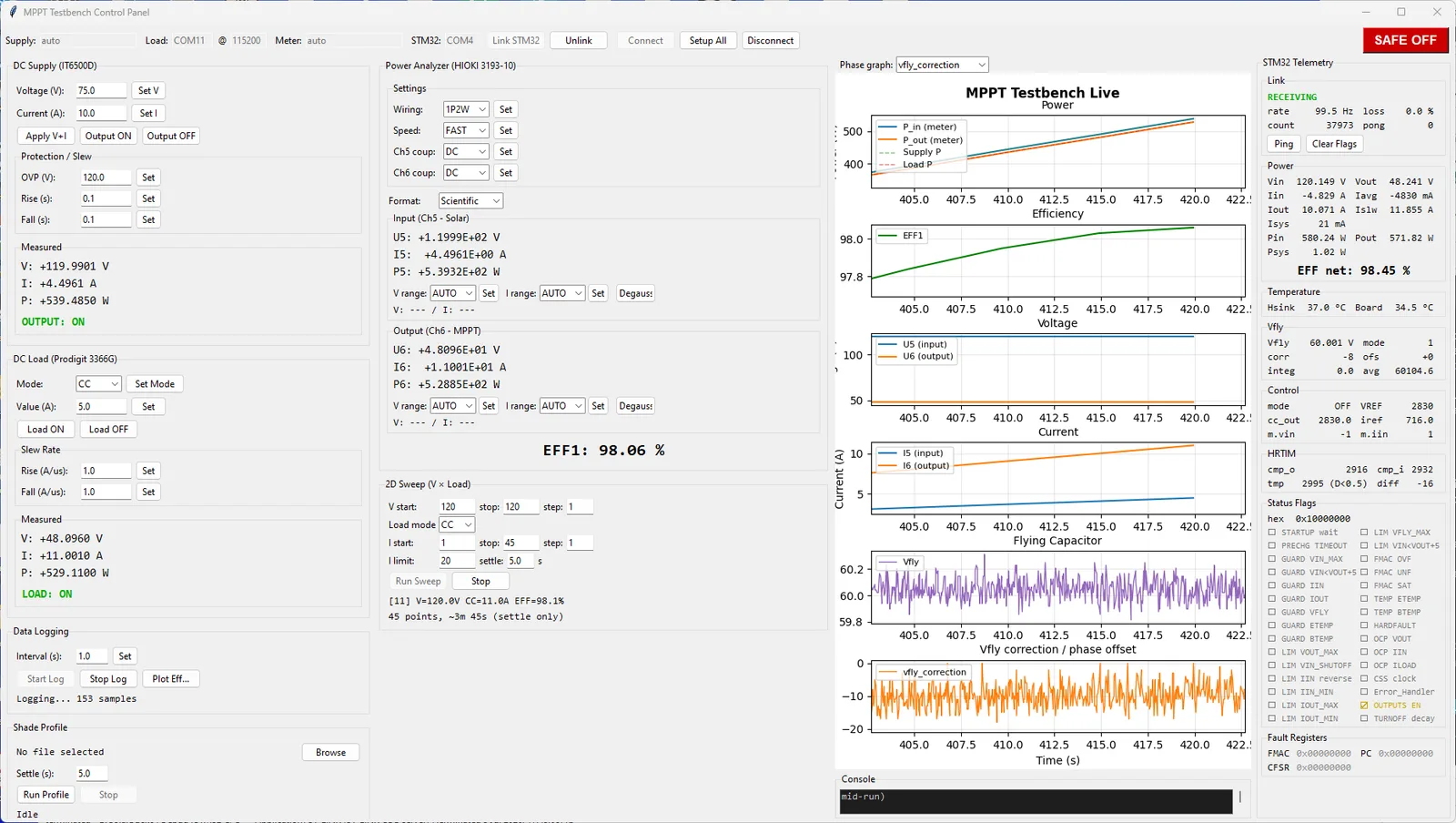
The test tool itself got a major upgrade for this campaign: the control panel now drives 2D sweeps (input voltage × load), streams live telemetry from the converter’s STM32 (flying capacitor voltage, temperatures, fault flags), and plots power, efficiency, and Vfly correction in real time while the Hioki power analyzer provides the reference measurements.
There’s still work ahead: thermal validation over long runs, the full 45–150V input range, and pushing toward our 98%+ target at nominal operating points. But today the design did exactly what it was designed to do, at the point where that’s hardest.
More on the project: LVSolarBuck: 48V MPPT Charger.