From Audio File to Record: The Vinyl Plant, and What Our Job Is
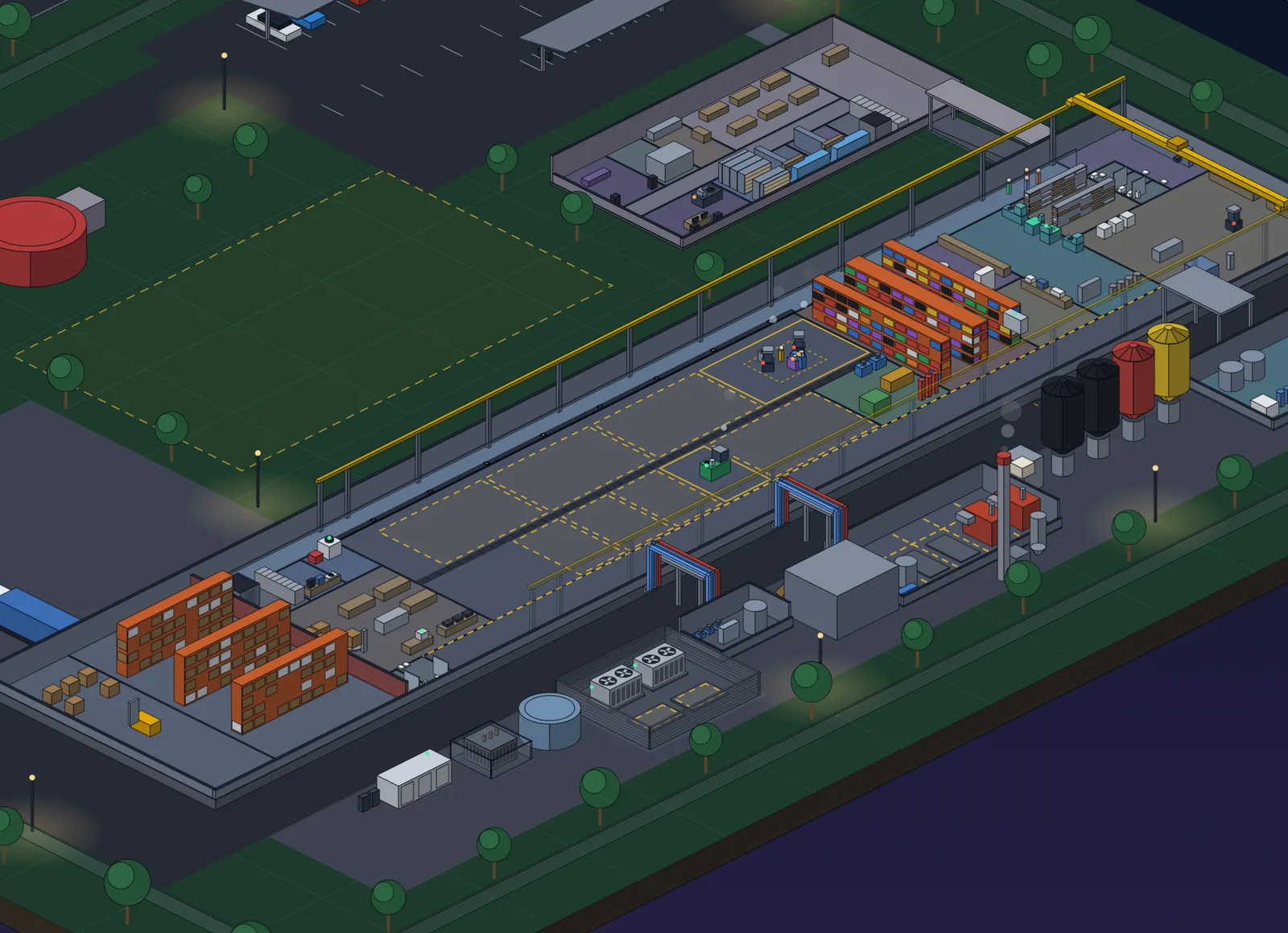
In our post from Making Vinyl Europe we wrote that something big could be coming. This is it: we are helping plan a vinyl record plant in northern Thailand, one that does the whole job under one roof, from the audio file an artist uploads to the record that arrives at a fan’s door.
It is a planning project today. Nothing is built and no machine is ordered. But the plan is far enough along that we can say what the plant is meant to do, and what buildfor.life’s part in it is.
What the plant will do
Many pressing plants only press. The lacquer is cut at a studio somewhere else, the stampers come from an electroforming shop that may be on another continent, and the jackets come from a printer. Every hand-off is a wait, and a place where something can go wrong. The plant we are planning keeps the chain in one place:
- Audio intake: master files and artwork, checked when they arrive
- Mastering for vinyl
- Lathe cutting: the master cut into a lacquer disc
- Electroforming: the lacquer silvered and nickel grown on it, making the father, the mother and the stampers
- Stamper prep: back-finished, punched and formed to fit the press
- Pressing, with the labels pressed in and the edge trimmed inline
- Inspection, finishing and packaging, with jackets and cartons from local packaging partners
- Fulfillment: bulk delivery to labels, or shipped directly to each fan
Two choices in that list matter more than the rest. Electroforming in-house removes the wait for stampers from overseas, a common bottleneck for pressing plants. And the father and the mother of every side go into an archive: a worn mother can be regrown from its father, so a repress years later does not need a new cut.
The press hall is planned mainly for colour and special editions (splatter, marble, effects) rather than plain black. Three times along the way the artist approves before anything continues: the master plan, the master, and the test pressing.
Who does what
The project is led by Simona, who looks after the management and the audio side; you met her in the Making Vinyl post as part of Poy Records. buildfor.life is the technical partner, with Alex as technical consultant. In practice our job has four parts:
- Engineering the plant. The process flow with every check in it, the utility concept (steam, cooling, heat recovery, solar), a parametric model of the buildings, the requirements for every machine, and the conversations with the companies that make them. Machine-data access goes into every request for a quote: a machine whose data we cannot read does not fit this plant.
- The data platform. Every station records what it did, and all of it has to land in one place, keyed to one identity. The servers, the network, the collectors and the software are ours to build, on the same NixOS setup we already run our own infrastructure on.
- Quality and traceability. Optical inspection of every record, press data from every cycle, sampled listening compared against the master, measurement of the metal parts, and the genealogy that ties them together.
- Software for customers. An ordering platform where an artist uploads the files, has them checked in the browser, gets an itemised offer, and can run a fan-funded campaign (with refunds if it does not reach its goal), and a portal where they follow their order through the plant.
The plant, interactive
The plant as a schematic, running much faster than real time. Click a station to see what happens there and what it records, press Tour to walk through it in order, or Record passport for the trace of the last record shipped. The stations are generic, not the machines we are buying, and every ID is simulated. Open it full screen.
The gold dots are the point of the drawing. Each one is a station writing what just happened into the plant’s data core. Switch the data layer off and you see a pressing plant the way it is usually drawn. Switch it on and you see the part we build.
One record, one trace
The identity of a record is simple: the stamper, the press, the press cycle and the side. The stamper knows its mother, the mother its father, the father its lacquer, and the lacquer the master the artist approved. The press cycle knows its temperatures and pressures, the compound lot and the label lot. Inspection adds its result, packaging the scan that matched the record to its jacket. A complaint about one copy resolves backwards to everything that touched it.
A few rules hold it together:
- ERPNext is the only system of record. Orders, artist approvals, stock, batches, inspections, the metal-part genealogy, deliveries and invoices all live in one open-source ERP. Everything we build reads and writes it; nothing keeps a second set of business records. Machine data (per-cycle rows, inspection results, time series) is far too much for an ERP, so it sits next to it under the same names.
- Log at the source, read only. Machine data comes from the machine, not from a clipboard, and our systems never write to a machine. Control and safety stay in the machines themselves.
- Write once. Events are append-only and chained by hash, so the log can be checked, and a correction is a new event, not an edit.
- Operators first. The press values appear at the press, against the recipe band, before they appear in any report. The best advice we got after Haarlem, from one of the equipment makers we met there, was exactly this: the data that makes a plant better is the data its staff use while they work, not the data that reaches management a week later.
- No internet required. Everything pressing, inspection and traceability need runs on site. An outage stops only the customer portal and the off-site backup, and both catch up afterwards.
For the customer, the trace is a product, not an internal file. Each copy can carry a code that opens its record passport: which stamper, which press, which cycle, which inspections, which approvals. The interactive above has a simulated one. This is also the part of the plan the industry responded to most: at Making Vinyl, most of the people we talked to were strongly interested in it.
Energy and water
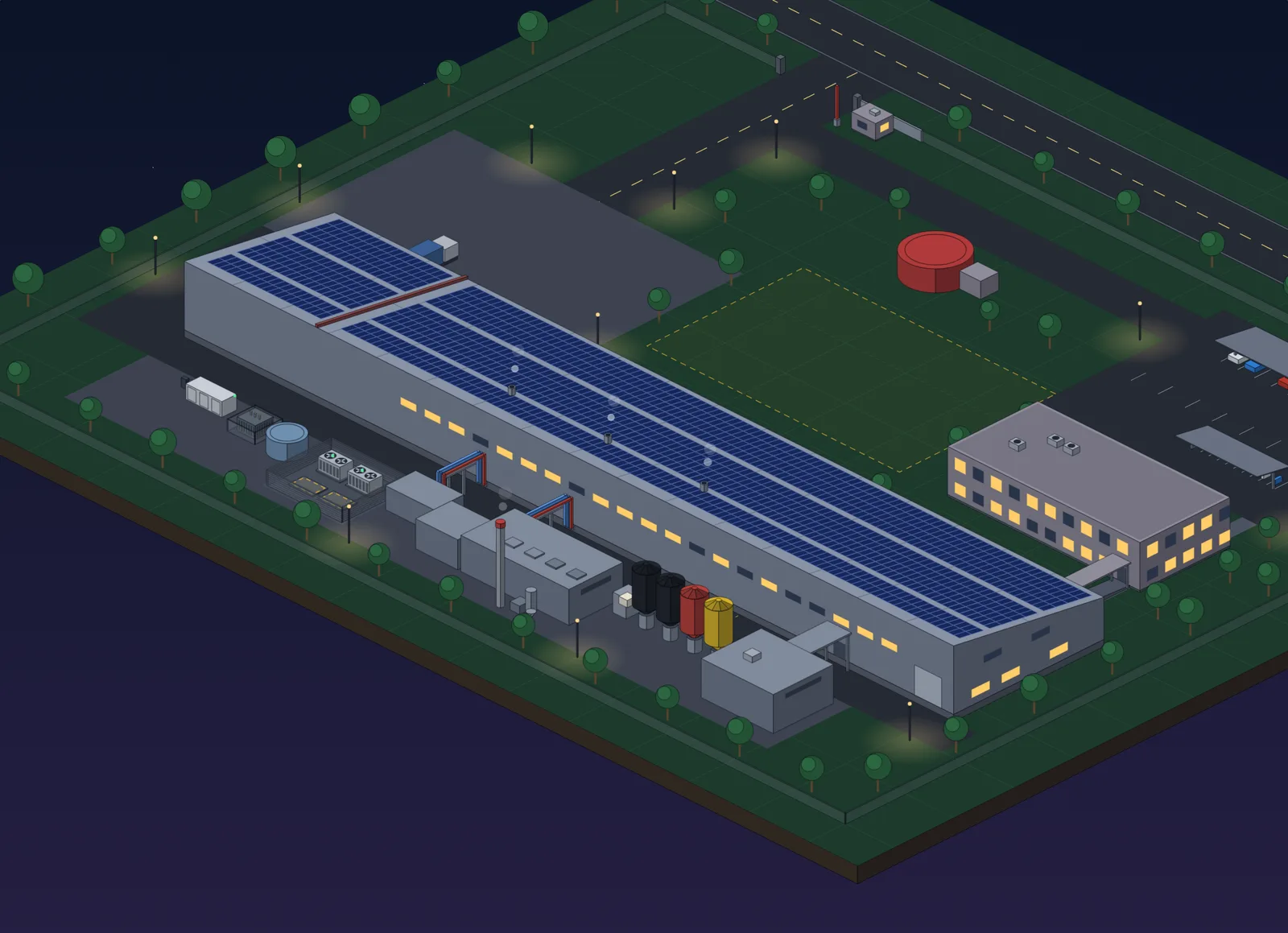
Pressing runs on steam. Steam heats the moulds every cycle, and chilled water takes the same heat out again a few seconds later. The plan is built around recovering that heat before generating new heat, raising steam from northern agricultural waste rather than electricity, and adding boiler and chiller modules as the plant grows. Solar goes on the roofs, and a battery is there for ride-through, so a short dip in the grid does not stop a press in the middle of a cycle.
Electroforming uses nickel and silver chemistry, and the target is no process water leaving the site: rinse water is treated in a closed loop with metal recovery, cooling water recirculates, condensate goes back to the boiler. Trim and rejected records are ground and go back into the press, after their own contamination check.
Open source, like everything else we do
Everything the plant runs and everything we build for it will be open source, and our own code will be published: NixOS on every server, ERPNext, PostgreSQL and VictoriaMetrics for the data, and our own factory application, station kiosks, instrument adapters and ordering platform. The exception is inside the machines: press controllers and instrument firmware are closed, so they are treated as appliances that export data and run none of our services. Which licence our own code gets is still open.
Once the stack has run a real plant for a while, we would like other pressing plants to be able to use it too.
Honest limits
Some of this has not been done before, and we would rather say so now:
- Nobody plays every record. A press makes a new record roughly every 25 seconds, and a 12-inch LP plays for about 40 minutes across both sides: one press would keep 80 to 95 listening stations busy. So listening is sampled (the first records off every stamper, then about one in fifty, more often as a stamper wears) and compared automatically against the master. Optical inspection covers every record. Neither replaces the other.
- There is no off-the-shelf inspection system for records. The optical layer is a custom integration of general machine vision, and we are planning it as an integration project, not a purchase.
- The automated listening check is a first. Each step exists somewhere (capturing the needle drop, comparing its spectrum against the master, counting clicks), but nobody sells the whole pipeline.
Built with Claude, checked against datasheets
Like the river monitor and our test bench, the planning work is done with Anthropic’s Claude under our direction: the planning documents, the simulated plant pages, the calculator we size the utilities with, and the interactive schematic in this post. What keeps it honest is what it is checked against: the equipment makers’ datasheets, physics where they publish nothing, and conversations with people who build and run plants. Every figure in the plan that no vendor has confirmed stays marked as an estimate until one does.
One change is under way: we are currently building a fully self-hosted inference server and switching to it, so the AI side of this work will run on hardware we operate, like the rest of our infrastructure.
What comes next
We are collecting quotes from equipment makers, asking labels and artists what they would order, and working through the approvals a new factory needs. There is no date for the first record yet, and we will not make one up. We will write here as it moves.
If you run a label, press records, build the machines that do, or would like a colour record pressed in Thailand one day, we would like to hear from you: contact us.
| Resource | Link |
|---|---|
| The plant, interactive | buildfor.life/vinyl-plant.html |
| Making Vinyl Europe 2026 | Our post from Haarlem |
| Poy Records | poyrecords.com |
| ERPNext | erpnext.com |
| NixOS | nixos.org |